

Best Office Chair for Long Hours
Answer a few questions about your body and your desk, and get one chair that fits — not a shortlist.
Find my matchFree to use, and there’s no account to create. We ask for an email at the end so we can send your matches to you.
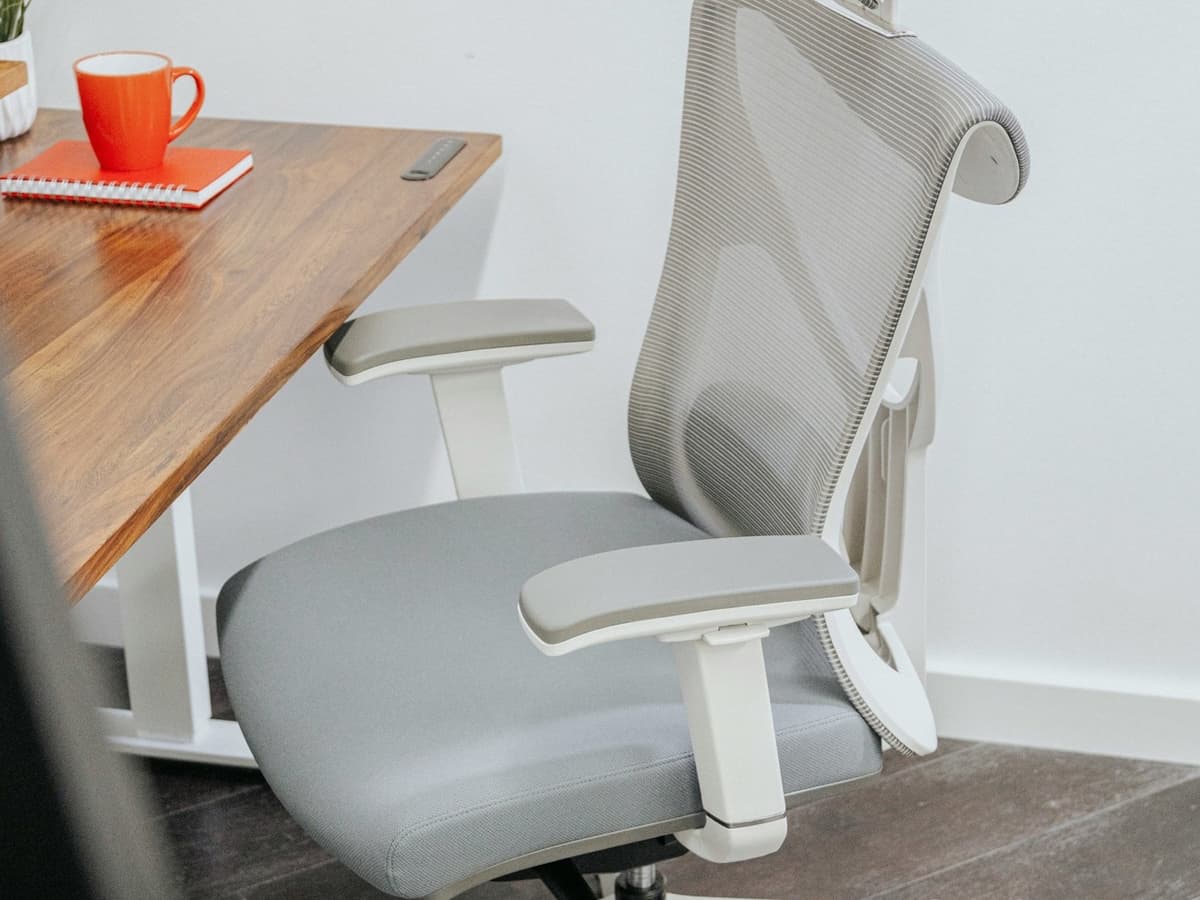
There’s no single “best office chair” — only the best one for you.
A tall person who barely leaves the chair needs a different seat than someone shorter who is up and down all day between meetings.
Our AI doesn’t have a quota to fill — it has one job: finding what fits your exact needs, not the one with the best commission.
A personalized match
Not a generic top-ten list
Save hours of research
Skip the endless tabs
100% free to use
No hidden fees, no signup
Honest recommendations
Not sponsored picks
Tailored questions, not a fixed checklist
Your questions are generated for what you’re actually shopping for, and each answer shapes the next one. Here’s how it starts.
- 1
How your day in the chair actually looks
Eight hours mostly seated and focused, or shorter stretches broken up by meetings and walking around.
- 2
Your body, honestly
Height, weight and hip width all decide whether a chair fits you or fights you, so the wizard asks for real numbers.
- 3
Which adjustments you will actually use
Seat height and depth, arm height and angle, lumbar height, recline tension and a lock — versus a chair that only goes up and down.
… and more, depending on what you tell us.
There is no single best office chair, and the word "ergonomic" on a product page does not mean one exists. A chair is ergonomic only when it fits the person in it: your legs need to reach the floor with the seat supporting most of your thigh, the backrest has to meet your spine where your spine actually curves, and the armrests have to land where your elbows naturally fall. A chair that does all of that for a colleague can be actively uncomfortable for you if you are taller, shorter, heavier or built differently. So the useful question is not which chair wins a review, it is which chair adjusts to your body and holds the setting.
The adjustments that matter are a short list, and most of the marketing is noise around them. Seat height is universal; seat depth, which slides the pan forward and back so you can use the backrest without the edge cutting into the back of your knees, is the one cheap chairs skip and the one tall and short people miss most. Adjustable lumbar support that moves up and down, and ideally in and out, lets you put the support on your curve rather than hoping a fixed bulge lands right. Arms that move in enough directions — height at least, ideally width and pivot — keep your shoulders down. And a recline with adjustable tension and a lock is what lets you shift position through the day instead of being held bolt upright.
Mesh versus foam is a genuine trade, not a ranking. A good mesh back breathes, flexes with you and never develops a permanent dent, which is why most task chairs above a certain price use it; a cheap mesh back can feel like a hammock with a hard front edge. Foam and fabric feel plusher on the first sit and hold heat over a long session, and the foam does compress over the years. Neither is wrong. If you run warm or sit for very long stretches, mesh usually wins; if you want a softer initial feel and your room is cool, foam is fine.
Warranty length is the most honest quality signal a manufacturer gives you. A chair sold with a 2-year warranty and a chair sold with a 12-year warranty are telling you how long each company expects its own mechanism, gas lift and upholstery to last. This is also why the used market is the best value in seating: a decade-old Herman Miller Aeron or Steelcase Leap that has been refurbished often costs a third of new, still has years of hard-use life left, and out-supports anything new at that price. Buying used contract-grade is the single best move for most people on a mid-range budget.
Finally, the thing no chair fixes: staying still. The healthiest posture is the next one, and the real value of a good adjustable chair is that it makes moving between positions easy — recline to read, sit forward to type, get up often. A brilliant chair you sit rigidly in for nine hours is worse for you than an average chair you get out of every half hour. Budget for a chair that reclines properly, and treat it as permission to move rather than a perfect position to be locked into.
How QuickPick works
Tell us what you need
In plain English. No model numbers, no spec knowledge required.
Answer a few smart questions
Our AI asks what actually changes the answer, then stops asking.
Get your top matches
A short, ranked shortlist you can compare side by side, with prices.
What actually changes as you spend more
Not a list of picks. Just a sense of which band you belong in before you answer a single question.
$150 – $350
Branded task chairs from IKEA (Markus, Järvfjället), Branch or HON. Reliable height adjustment, a basic tilt, and often simple height-adjustable arms. Adjustable seat depth and real lumbar adjustment are rare here, and the mechanisms are lighter-duty.
$400 – $800
Fully adjustable chairs: Steelcase Series 1 and 2, Branch Ergonomic, Herman Miller Sayl, or a refurbished Aeron or Leap. Seat depth, adjustable lumbar, multi-way arms and a lockable recline with tension control. Where a chair stops compromising, and where most people should look.
$900 – $1,800
New Herman Miller Aeron and Embody, Steelcase Gesture and Leap, Humanscale Freedom. Better materials, warranties up to 12 years, and refined mechanisms. Worth it if you sit all day for a living or have specific support needs — and often matched used for far less.
Typical street prices, reviewed 2026-09-04. QuickPick shows live retailer prices on your actual matches.
Frequently asked questions
- How much should I spend on an office chair for long hours?
- For full-time desk work, somewhere between $400 and $800 buys a chair with adjustable seat depth, real lumbar adjustment and a lockable recline, which is enough to last a decade. Below about $250 you are mostly getting height and a basic tilt. The best value in the mid-range is often a professionally refurbished Herman Miller or Steelcase, which can undercut a new chair by half.
- Is a mesh chair better than a padded one?
- For long hours, and if you run warm, usually yes: mesh breathes and does not develop a permanent sag. Padded foam feels more comfortable for the first ten minutes and holds heat after an hour, and it compresses over the years. It is a preference, not a quality gap. A cheap mesh chair with a hard front edge on the seat is worse than good foam.
- What chair adjustments actually matter?
- Seat height, seat depth, lumbar height, arm height, and recline tension with a lock. Seat depth and adjustable lumbar are the two that cheap chairs leave out and that make the biggest difference to whether the backrest works for your spine. Almost everything past that list is refinement.
- Are expensive ergonomic chairs like the Aeron worth it?
- If you sit all day for work and buy new, they earn it slowly, through a 12-year warranty and a mechanism that still works at year ten. If your budget is tighter, the same chairs bought refurbished give you most of the benefit for a third of the price. A $150 chair marketed as 'ergonomic' with no seat-depth or lumbar adjustment is not the same product.
- Is a gaming chair or an office chair better for long hours?
- For long working hours, a proper task chair. Racing-style gaming chairs have a fixed bucket seat, a tall back many people never touch, and limited real adjustment, and the bolsters that look supportive often press on your legs. Some people find them comfortable, but they are built around a look, not around fitting different bodies.
- How do I know if a chair fits me before I buy?
- Check the stated seat height range against your leg length, the seat depth and width against your build, and the maximum user weight. If you can, sit in one for twenty minutes rather than two, at a showroom or a friend's. QuickPick asks for your height, weight and how you sit so the shortlist is chairs that physically fit you.
Honest recommendations — not endless tabs.
Answer a few questions and get matched in under a minute. Free, and no signup.