

Best Power Bank for Your Phone
Tell us how much backup you want and how you carry it. We match the power bank to that, not to a bestseller list.
Find my matchFree to use, and there’s no account to create. We ask for an email at the end so we can send your matches to you.
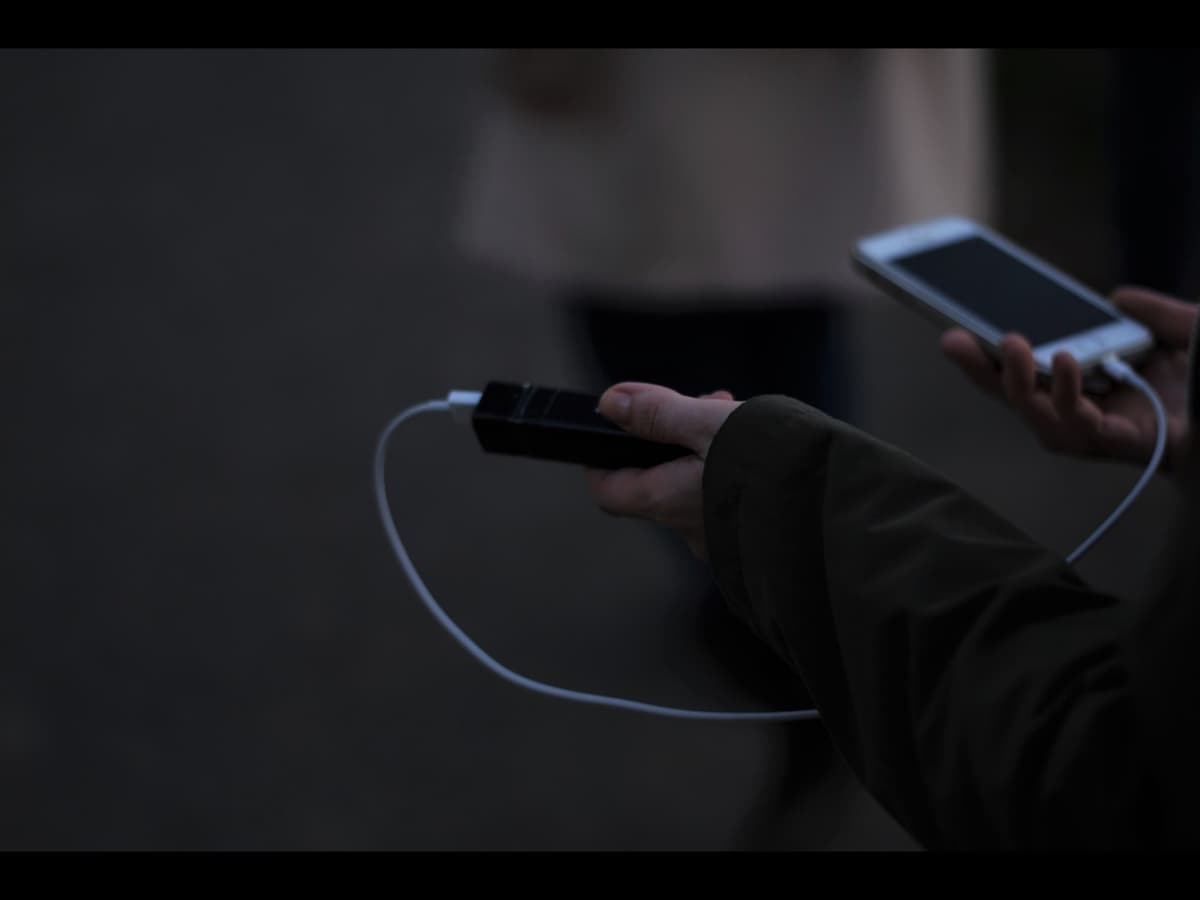
There’s no single “best power bank” — only the best one for you.
Someone who just needs a small top-up to survive a long day needs a different power bank than someone who wants two full charges for a festival weekend with no outlet.
Our AI doesn’t have a quota to fill — it has one job: finding what fits your exact needs, not the one with the best commission.
A personalized match
Not a generic top-ten list
Save hours of research
Skip the endless tabs
100% free to use
No hidden fees, no signup
Honest recommendations
Not sponsored picks
Tailored questions, not a fixed checklist
Your questions are generated for what you’re actually shopping for, and each answer shapes the next one. Here’s how it starts.
- 1
How much backup you want
One emergency top-up, one full charge, or two-plus full charges to get through a weekend.
- 2
How you carry it
In a jeans pocket, a small bag, or magnetically stuck to the back of the phone.
- 3
Wired or magnetic
A cable and a USB-C port, or a MagSafe-style bank that snaps on and charges wirelessly.
… and more, depending on what you tell us.
Decide how much backup you actually need, because it changes the whole shape of the purchase. A 5,000mAh bank gives about two-thirds of a phone charge, weighs almost nothing and fits a jeans pocket. A 10,000mAh bank gives roughly one and a half charges and still fits a jacket. A 20,000mAh bank gives three-plus charges and is a small brick for a bag. Most people over-buy and then leave the heavy one at home.
Remember the conversion loss. Because the cells store energy at 3.7V and your phone charges at a higher voltage, you receive around 65% of the printed capacity. A 10,000mAh bank delivers roughly 6,500mAh to the phone, which is about one and a half charges for a typical handset with a 4,500mAh battery. Judge banks by that real number, not the label.
Wireless and magnetic power banks are convenient and inefficient. A MagSafe-style bank that snaps to the back of the phone is genuinely nice for walking around, but wireless charging loses another fifth or so on top of the conversion loss, so a 5,000mAh magnetic bank often delivers barely more than a third of a charge. Use them for convenience top-ups, not as your main backup, and pick one that also has a USB-C port for the wired option.
Speed depends on both ends. Your phone has a maximum charging wattage, often 20–30W for iPhones and anywhere from 45 to 120W for various Android phones, and the bank has a maximum output per port. To charge fast you need a bank that supports your phone's fast-charge standard, which for most phones means USB-C Power Delivery, plus a cable that can carry it. A cheap USB-A-only bank charges slowly no matter what the phone can do.
A small everyday bank plus a cable that lives in your bag beats a big one you have to remember. The failure mode is always "it is at home" or "it is flat". A 10,000mAh bank kept charged in your daily bag, ideally one that shows a remaining percentage rather than four LEDs, solves the real problem.
How QuickPick works
Tell us what you need
In plain English. No model numbers, no spec knowledge required.
Answer a few smart questions
Our AI asks what actually changes the answer, then stops asking.
Get your top matches
A short, ranked shortlist you can compare side by side, with prices.
What actually changes as you spend more
Not a list of picks. Just a sense of which band you belong in before you answer a single question.
$15 – $25
A 5,000–10,000mAh bank from Anker, INIU or UGREEN with USB-C in and out. One emergency charge up to about one and a half full charges, and genuinely pocketable.
$30 – $50
A 10,000mAh bank with 20–30W USB-C PD and a percentage display, or a MagSafe-compatible magnetic bank. Fast enough to matter, and either truly pocketable or stuck to the phone.
$60 – $90
A 10,000mAh bank with a built-in cable and folding wall plug, so it replaces your charger too, or a premium magnetic bank with higher wireless output and a kickstand. Convenience features, not more capacity.
Typical street prices, reviewed 2026-09-03. QuickPick shows live retailer prices on your actual matches.
Frequently asked questions
- How many charges is a 10,000mAh power bank?
- Around one and a half full charges for a typical modern phone. You lose roughly a third of the rated capacity to voltage conversion, so the bank delivers about 6,500mAh, against a phone battery of 4,000–5,000mAh. A 5,000mAh bank is about two-thirds of one charge; a 20,000mAh bank is three or more.
- What size power bank do I need for my phone?
- For a daily safety net, 5,000–10,000mAh is enough and stays pocketable. For a full day of heavy use with no outlet, or a festival, 20,000mAh. Going bigger mostly adds weight you will end up leaving behind.
- Are magnetic or MagSafe power banks any good?
- For convenience, yes: snapping a bank onto the phone and using it while you walk around is genuinely useful. For efficiency, no: wireless transfer wastes extra energy, so you get noticeably less usable charge than the rating suggests. Get one with a USB-C port so you can also charge it, and other things, by cable.
- Do I need a fast-charging power bank?
- If you often charge in short windows, yes. Match the bank to your phone's fast-charge standard (USB-C Power Delivery for most phones, with some Android phones needing their own standard) and use a cable rated for the wattage. If you mostly charge overnight or over a long stretch, a standard bank is fine.
- Why does my power bank not fully charge my phone twice?
- Because the rated capacity is measured at the cell voltage, not the phone's charging voltage, and the conversion loses about a third. A 10,000mAh bank has roughly 6,500mAh of usable output, which is one and a half charges for most phones, not two.
- Wired or wireless power bank?
- Wired (USB-C) is faster and more efficient and should be your default. Wireless or magnetic is a convenience layer for using the phone while it charges on the move. The best answer for many people is a magnetic bank that also has a USB-C port, so you get both.
Honest recommendations — not endless tabs.
Answer a few questions and get matched in under a minute. Free, and no signup.
Looking for something else?