

Best Portable Power Station for Camping and Outages
Tell us what you need to keep running and for how long. We match the power station to the load, not to a headline number.
Find my matchFree to use, and there’s no account to create. We ask for an email at the end so we can send your matches to you.
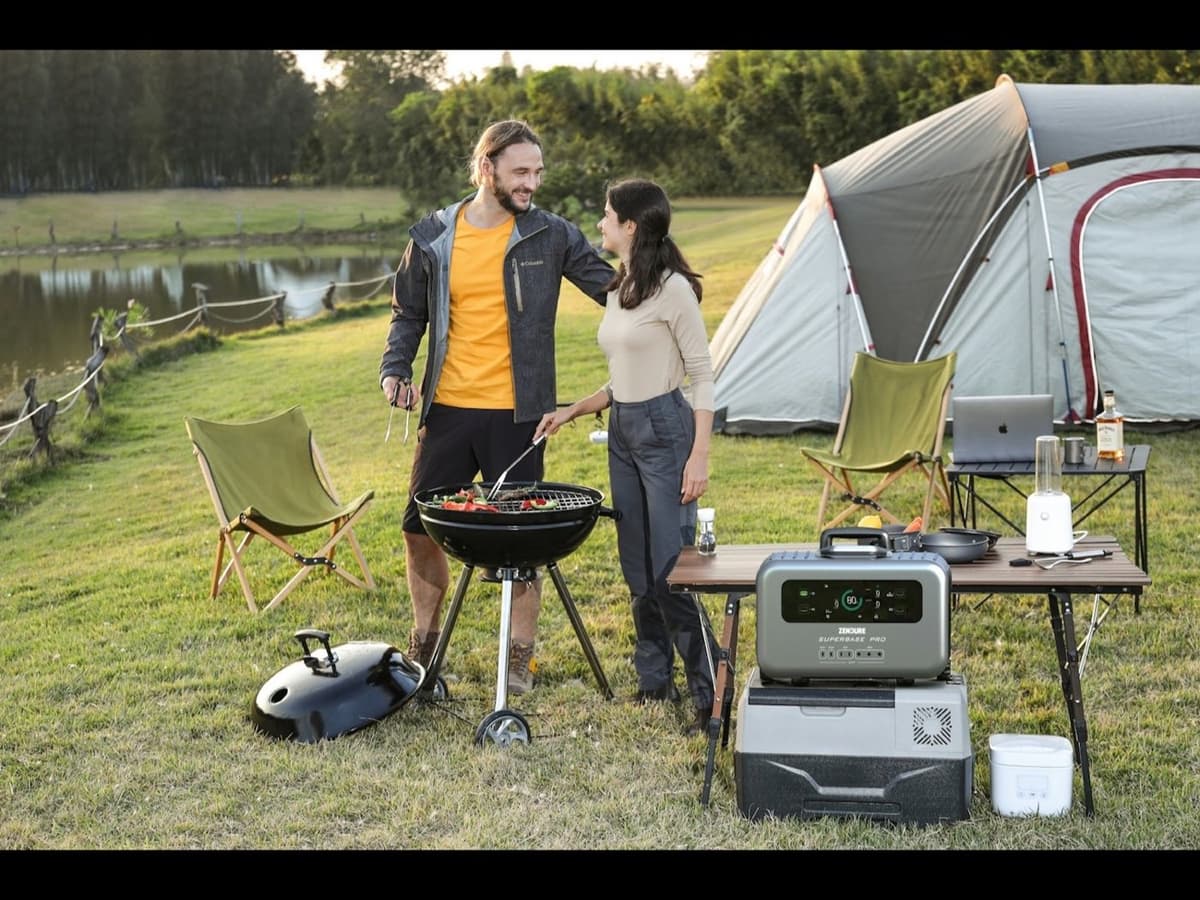
There’s no single “best portable power station” — only the best one for you.
Someone keeping phones and a light charged on a weekend camp needs a different power station than someone running a CPAP machine and a fridge through a multi-day power cut.
Our AI doesn’t have a quota to fill — it has one job: finding what fits your exact needs, not the one with the best commission.
A personalized match
Not a generic top-ten list
Save hours of research
Skip the endless tabs
100% free to use
No hidden fees, no signup
Honest recommendations
Not sponsored picks
Tailored questions, not a fixed checklist
Your questions are generated for what you’re actually shopping for, and each answer shapes the next one. Here’s how it starts.
- 1
What you need to run
USB devices only, lights and a fan, a fridge or CPAP machine, or power tools and a kettle.
- 2
For how long between recharges
An evening, a weekend, or an open-ended trip where it has to be topped up as you go.
- 3
How you'll recharge it
From a wall outlet, a car socket, or solar panels for genuinely off-grid use.
… and more, depending on what you tell us.
Size a power station by two separate numbers: the output wattage it can deliver at once, and the capacity it holds. A unit rated "300W / 300Wh" can run devices totalling up to 300W, and can do so for about an hour at full load. A fridge that draws 60W running but 300W at start-up needs a station whose surge rating covers that spike or it shuts off. List your devices, add up their running watts, and check the biggest one's start-up surge against the station's surge spec.
For emergency backup, the devices that matter are the ones with a real consequence if they stop: a CPAP machine, a medication fridge, a sump pump, home internet, and phones for contact. A 500–1000Wh station with a pure sine wave AC output covers a CPAP for a night or two and keeps phones and a router alive for days. Anything that heats (kettle, space heater, hair dryer) draws 1000–1800W and drains even a large station in under an hour, so plan around not using those.
Battery chemistry is the biggest quality divide. Cheaper stations use standard lithium-ion (NMC) cells, good for perhaps 500 full cycles before noticeable capacity loss. Better ones use lithium iron phosphate (LiFePO4), which lasts 3,000+ cycles, tolerates heat better and is safer. For a unit you might own for a decade and cycle often, LiFePO4 is worth the premium; for occasional use, NMC is acceptable.
Recharging is where camping and outage use differ. For camping, a 100–200W solar panel lets a station last an open-ended trip, and car charging tops it up on the drive. For outages, the station needs to be kept charged and ready, and ideally supports UPS pass-through so it can sit between the wall and your essential devices and take over instantly when the power drops. Check the recharge time from empty, because some large units take eight hours or more on AC.
Weight scales with capacity and it matters. A 300Wh unit is around 3kg and genuinely portable. A 1000Wh unit is 10–15kg and a two-hands lift you site once. A 2000Wh+ unit often has wheels. Buy the smallest capacity that covers your actual load and runtime, because the next size up is a real jump in what you can carry.
How QuickPick works
Tell us what you need
In plain English. No model numbers, no spec knowledge required.
Answer a few smart questions
Our AI asks what actually changes the answer, then stops asking.
Get your top matches
A short, ranked shortlist you can compare side by side, with prices.
What actually changes as you spend more
Not a list of picks. Just a sense of which band you belong in before you answer a single question.
$150 – $300
A 200–300Wh station (Jackery Explorer 240, EcoFlow River 2, Anker 521). Keeps phones, a tablet, a laptop, lights and a small fan going for a weekend. Not enough for a fridge or anything that heats.
$400 – $800
A 500–1000Wh LiFePO4 station with 800–1500W output (EcoFlow River 2 Pro, Jackery 1000, Bluetti). Runs a CPAP overnight, a small fridge for several hours, and everything USB for days. The sensible pick for both camping and short outages.
$1,000 – $2,500
A 1500–3000Wh station with 2000W+ output and expansion batteries, often with UPS pass-through and fast solar input. Runs a fridge, internet and medical devices through a multi-day outage, or a full van-life setup.
Typical street prices, reviewed 2026-09-03. QuickPick shows live retailer prices on your actual matches.
Frequently asked questions
- What size power station do I need for camping?
- For phones, a tablet, a laptop, camp lights and a fan over a weekend, 200–300Wh is enough. Add a 12V cool box or a CPAP and you want 500–1000Wh. If you can recharge with a solar panel during the day, a mid-sized station can support an open-ended trip.
- Can a portable power station run a refrigerator?
- A small 12V camping fridge (40–60W running), yes, for many hours on a 500Wh+ station. A full-size home fridge draws less on average but surges to 800–1200W at start-up, so you need a station rated for that surge and around 1000Wh+ to get through a night. Check the fridge's start-up surge, not just its running watts.
- LiFePO4 or lithium-ion power station?
- LiFePO4 (LFP) lasts around 3,000+ charge cycles versus roughly 500 for standard lithium-ion, handles heat better and is safer, at a higher price and slightly more weight. For frequent use or long ownership, choose LiFePO4. For a station used a few times a year, standard lithium-ion is acceptable and cheaper.
- How do I recharge a power station off-grid?
- Solar panels (100–200W is a common pairing) recharge it during daylight, and a car 12V socket tops it up while driving, though slowly. Match the panel wattage to the station's maximum solar input. For a multi-day trip, solar is what turns a fixed capacity into an open-ended supply.
- Can a power station power my house during an outage?
- It can power specific devices you plug into it — a fridge, internet, medical equipment, lights, phones — not your whole house through the wall wiring. A 1000–2000Wh station with UPS pass-through covers the essentials for one to three days. Whole-home backup needs a permanently installed battery or generator.
- Power bank or power station — what is the difference?
- A power bank is a USB battery for phones, tablets and USB-C laptops, small enough for a pocket or bag and legal to fly with. A power station adds an AC wall outlet, is rated in hundreds or thousands of watt-hours, weighs kilograms, and runs household devices. Camping and outage use almost always means a power station.
Honest recommendations — not endless tabs.
Answer a few questions and get matched in under a minute. Free, and no signup.
Looking for something else?