

Best Power Bank for Travel
Tell us what you carry and how you travel. We match the power bank to your trip, not to a spec sheet.
Find my matchFree to use, and there’s no account to create. We ask for an email at the end so we can send your matches to you.
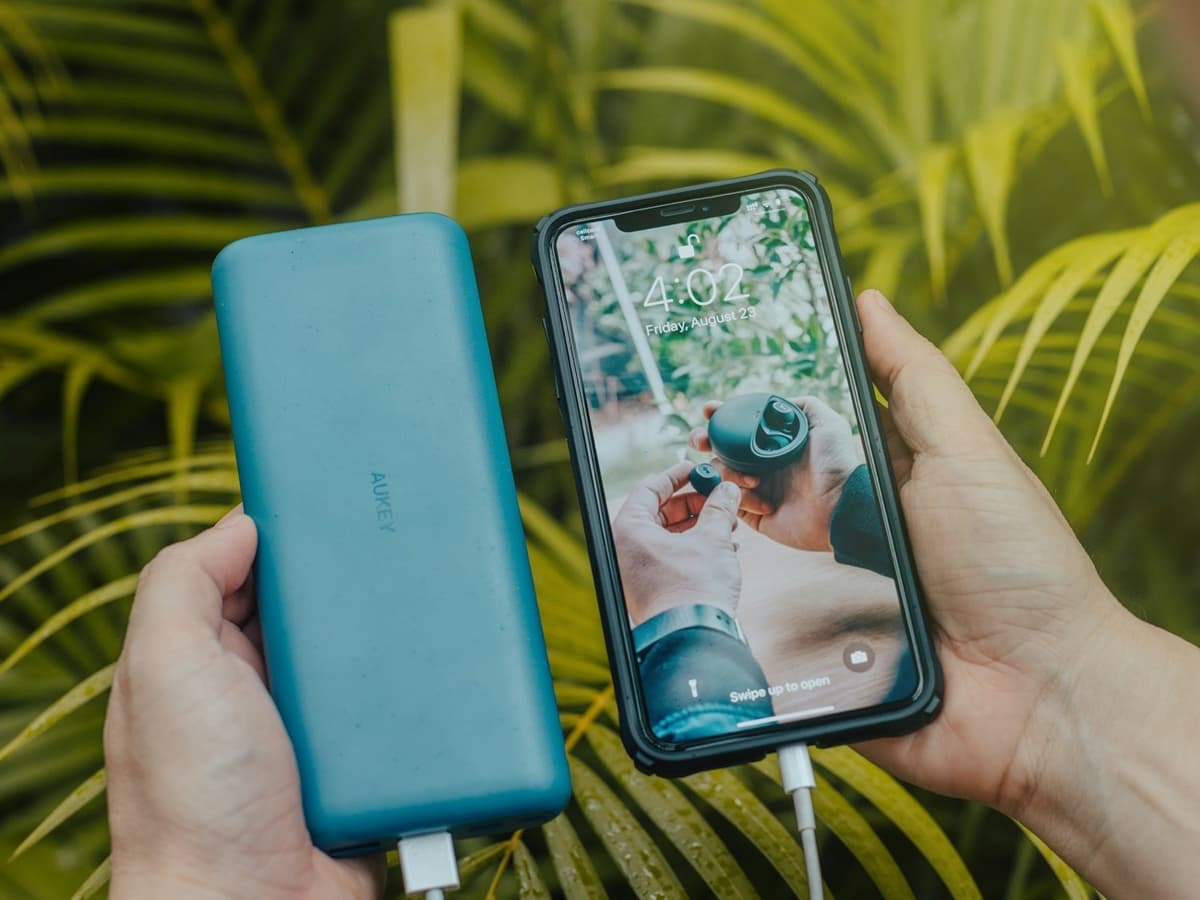
There’s no single “best power bank” — only the best one for you.
Someone on a weekend city trip with just a phone needs a different power bank than someone on a two-week trip through areas with unreliable power, carrying a laptop, a camera and a phone.
Our AI doesn’t have a quota to fill — it has one job: finding what fits your exact needs, not the one with the best commission.
A personalized match
Not a generic top-ten list
Save hours of research
Skip the endless tabs
100% free to use
No hidden fees, no signup
Honest recommendations
Not sponsored picks
Tailored questions, not a fixed checklist
Your questions are generated for what you’re actually shopping for, and each answer shapes the next one. Here’s how it starts.
- 1
What you're charging
A phone only, a phone plus earbuds and a watch, or a phone, tablet and laptop together.
- 2
Trip length and access to outlets
Day trips with a hotel every night, or long stretches away from reliable power.
- 3
Airline rules
Carry-on only, and the 100Wh limit that caps you at roughly 27,000mAh without asking the airline.
… and more, depending on what you tell us.
The number on the box is not the number you get. A "10,000mAh" power bank stores its capacity at 3.7 volts, but your phone charges at a higher voltage, and the conversion plus heat losses mean you actually receive around 6,000 to 6,800mAh at the phone. So a 10,000mAh bank is roughly one and a half to two full phone charges, not the three the marketing implies. Plan for about 65% of the printed figure.
Airlines cap what you can bring, and the limit is in watt-hours, not mAh. Spare lithium batteries must travel in carry-on, and anything up to 100Wh (about 27,000mAh at 3.7V) is allowed without asking. Between 100 and 160Wh you need airline approval and are usually limited to two. Above 160Wh is banned from passenger flights. In practice a 20,000 to 26,800mAh bank is the travel ceiling, and it should have the Wh rating printed on it for the security check.
Match the output to what you carry. A phone-only traveller is fine with any bank that does 18W or more over USB-C. Add a tablet and you want 30W. Add a laptop and you need 60W minimum, ideally 100W, over USB-C Power Delivery rather than a plain USB-A port. Watch how ports share power, too: many banks split their headline wattage across ports, so charging two things at once halves the speed to each.
Recharge time is the spec people forget and then regret. A big bank on a slow input can take six to eight hours to refill, which is useless if you only have the hotel night. Look for a bank that accepts at least 30W input over USB-C so it refills in two to three hours, and ideally one that can pass power through to your devices while it is itself charging.
The best travel bank is the one you actually carry, not the biggest one you own. A 26,800mAh brick left in the hotel because it is heavy charges nothing. Many travellers are better served by a 10,000mAh bank with a built-in wall plug and cable that lives in a jacket pocket, plus a larger one reserved for long transit days.
How QuickPick works
Tell us what you need
In plain English. No model numbers, no spec knowledge required.
Answer a few smart questions
Our AI asks what actually changes the answer, then stops asking.
Get your top matches
A short, ranked shortlist you can compare side by side, with prices.
What actually changes as you spend more
Not a list of picks. Just a sense of which band you belong in before you answer a single question.
$20 – $35
A 10,000mAh bank from Anker, INIU or UGREEN with USB-C PD around 20W. One to two phone charges, genuinely pocketable, and fine for day trips and short flights.
$45 – $75
A 20,000–26,800mAh bank with 30–65W USB-C PD, or a 10,000mAh all-in-one with a folding wall plug and built-in cables. Charges a tablet, tops up a laptop, and refills fast enough for an overnight stop.
$90 – $150
A 25,000mAh 100W+ bank with multiple USB-C PD ports and a display, able to run a laptop plus a phone and camera. Heavy, but it replaces a bag of chargers on a long trip.
Typical street prices, reviewed 2026-09-03. QuickPick shows live retailer prices on your actual matches.
Frequently asked questions
- How many mAh can I take on a plane?
- The rule is in watt-hours: up to 100Wh (roughly 27,000mAh at 3.7V) is allowed in carry-on with no approval, 100–160Wh needs airline permission and is usually limited to two, and over 160Wh is not permitted. Spare batteries and power banks must go in the cabin, never checked luggage. Buy a bank with the Wh figure printed on the case.
- How many phone charges is a 10,000mAh power bank?
- About one and a half to two for a typical modern phone. You lose roughly a third of the rated capacity to voltage conversion and heat, so a 10,000mAh bank delivers around 6,500mAh to the phone, and modern phones have batteries of 4,000–5,000mAh. Judge banks by that real figure.
- Do I need USB-C Power Delivery for travel?
- For a phone only, it is a nice-to-have that charges faster. For a tablet or laptop it is essential: USB-A ports top out around 18W, which will not meaningfully charge a laptop. If you carry anything bigger than a phone, insist on USB-C PD and check the wattage.
- Can a travel power bank charge my laptop?
- If the laptop charges over USB-C, yes: you need a bank with a USB-C PD output that meets your laptop's charger rating (60W for light laptops, 100W for most 13–14 inch models). Laptops with a barrel-plug charger cannot be charged by a normal power bank and need a portable power station with an AC outlet.
- How fast does a power bank recharge?
- It depends entirely on the input rating. A cheap bank charging over USB-A can take 6–8 hours; a bank that accepts 30W or more over USB-C refills in 2–3 hours. If you only get one night at an outlet, the input spec matters as much as the capacity.
- What size power bank should I buy for travel?
- For a phone and small accessories on trips with nightly outlet access, 10,000mAh is plenty and stays pocketable. For long transit days or a tablet, 20,000mAh. For a laptop or genuinely off-grid stretches, 25,000–26,800mAh with 100W USB-C PD, which is also the largest you can fly with.
Honest recommendations — not endless tabs.
Answer a few questions and get matched in under a minute. Free, and no signup.
Looking for something else?