

Best Running Shoes
Tell us where you run and how far. We match the shoe to your training, not to a review score.
Find my matchFree to use, and there’s no account to create. We ask for an email at the end so we can send your matches to you.
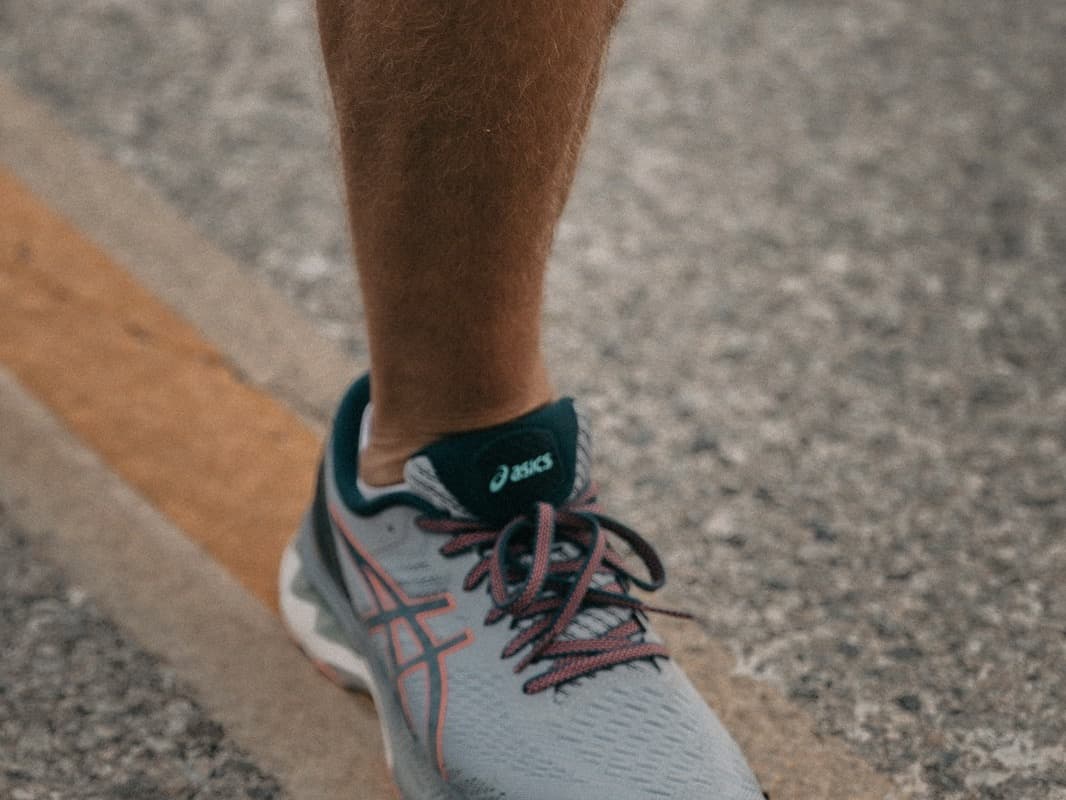
There’s no single “best running shoes” — only the best one for you.
A heavier runner building up to a marathon on pavement needs a different shoe than someone doing a 5K parkrun twice a week.
Our AI doesn’t have a quota to fill — it has one job: finding what fits your exact needs, not the one with the best commission.
A personalized match
Not a generic top-ten list
Save hours of research
Skip the endless tabs
100% free to use
No hidden fees, no signup
Honest recommendations
Not sponsored picks
Tailored questions, not a fixed checklist
Your questions are generated for what you’re actually shopping for, and each answer shapes the next one. Here’s how it starts.
- 1
Where you run
Roads and pavement, a treadmill, trails, or a running track. Each one wants a different outsole and a different amount of protection.
- 2
Distance and how often
Short easy runs a couple of times a week, or high weekly mileage with long runs at the weekend. Volume decides how much shoe you need.
- 3
Your weight and any injury history
Past shin splints, knee pain or plantar fasciitis, and how much load the shoe has to absorb, both change which cushioning level fits.
… and more, depending on what you tell us.
The most useful thing to know about running shoes is that they are a consumable, not a purchase. The foam midsole that does the cushioning compresses permanently with use, and most shoes are worn out between 300 and 500 miles: sooner if you are heavier or run mostly on pavement, later if you are light and run on softer ground. Choosing the "best" shoe matters far less than replacing whatever you run in before it goes flat, because a dead shoe is where a lot of running niggles begin.
Fit is the whole game, and running-shoe fit is not street-shoe fit. You want roughly a thumb's width of space in front of your longest toe, because feet swell over a run and slide forward on downhills, and a shoe that fits perfectly in the shop will bruise toenails at mile six. Most people take a running shoe half a size to a full size larger than their everyday shoe. Try them on at the end of the day, in the socks you actually run in.
You can mostly ignore the pronation marketing. For years shoes were sold to "correct" how far your foot rolls inward, and the evidence that this prevents injury never really held up. The current advice is simpler: pick the shoe that feels best on a short jog, in a cushioning level you like, and do not overthink the biomechanics. If you have a specific diagnosed problem, a physiotherapist or podiatrist is worth more than a wall of stability shoes.
Match the shoe to the surface and to the session. Road shoes are smooth and firm and miserable in mud; trail shoes have deep lugs and a rock plate and feel clumsy and slow on pavement. If you genuinely do both, that is two pairs, not one compromise. The same applies to speed: a soft, tall, maximum-cushion shoe is lovely for easy running and vague and unstable for intervals, where you want something lower and firmer underfoot.
A rotation of two moderately priced pairs usually beats one expensive pair. The foam recovers between runs, so alternating shoes makes both last longer, and keeping one firm pair and one soft pair covers far more of your training than any single shoe can. Carbon-plated racing shoes are a real effect and a genuine luxury: they are the least durable shoes you can buy and do very little for easy mileage.
How QuickPick works
Tell us what you need
In plain English. No model numbers, no spec knowledge required.
Answer a few smart questions
Our AI asks what actually changes the answer, then stops asking.
Get your top matches
A short, ranked shortlist you can compare side by side, with prices.
What actually changes as you spend more
Not a list of picks. Just a sense of which band you belong in before you answer a single question.
$60 – $90
Last year's version of a mainstream daily trainer: Brooks Ghost, ASICS Gel-Cumulus, Saucony Ride, Nike Pegasus, one generation back. The foam and the fit are most of the way to the current model at close to half the price. The smartest place to shop for most runners.
$120 – $160
The current daily trainer, or the start of a two-shoe rotation. Foams that stay bouncy for more miles, better uppers, and the up-to-date fit. If you run four or more times a week, the extra durability alone tends to justify the step up.
$180 – $260
Carbon- or nylon-plated "super shoes" with the lightest, most resilient foams: Nike Vaporfly, Saucony Endorphin, ASICS Metaspeed. Measurably faster over a race and worn out in 150 to 200 miles. A treat for race day, not a trainer for everyday running.
Typical street prices, reviewed 2026-09-03. QuickPick shows live retailer prices on your actual matches.
Frequently asked questions
- How long do running shoes last?
- Most run out of useful cushioning between 300 and 500 miles. Heavier runners and pavement wear them faster; lighter runners on soft trails get longer. A more reliable signal than the odometer is feel: when the shoe stops feeling springy, or you notice new aches after runs that never used to hurt, the foam is done regardless of how the outsole looks.
- What size running shoe should I buy?
- Usually half a size to a full size larger than your everyday shoes. You want about a thumb's width of space ahead of your longest toe, because feet swell on a run and slide forward on downhills. Try shoes on late in the day in your running socks, and if a brand is known to run short or narrow, account for that.
- Do I need stability or motion-control shoes?
- Probably not. The idea that shoes should correct how your foot rolls has not held up well in research, and most runners do fine in a neutral shoe that simply feels comfortable. Stability shoes are not harmful, and some people genuinely prefer how they feel, but they are not a required purchase. A diagnosed issue is a reason to see a professional, not to guess at the shoe wall.
- Do I need separate road and trail running shoes?
- If you run on both regularly, yes. Road shoes have smooth, firm outsoles that offer almost no grip in mud, and trail shoes have deep lugs and stiffer plates that feel clumsy and wear quickly on tarmac. A light trail shoe can cover occasional gravel paths, but genuine off-road running on a road shoe is slow and slippery.
- Are carbon-plate super shoes worth it?
- For racing, the speed benefit is real and well documented. For everyday training they make little sense: they are expensive, wear out in a couple of hundred miles, and the firm, propulsive ride is wasted on easy runs. Most people who own a pair keep them for race day and hard workouts and train in something cheaper.
- How much should I spend on running shoes?
- Between $60 and $90 buys last year's version of an excellent daily trainer, which is enough for most runners. Step up to $120–$160 if you run often and want current foams and a second pair to rotate. Only go past that for carbon-plated racing shoes, and only if you race. QuickPick asks your real budget first so nothing on the shortlist is out of reach.
Honest recommendations — not endless tabs.
Answer a few questions and get matched in under a minute. Free, and no signup.
Looking for something else?