

Best Party Speaker
Tell us your crowd size and whether you need a microphone. We match the speaker to the party, not to a watt figure.
Find my matchFree to use, and there’s no account to create. We ask for an email at the end so we can send your matches to you.
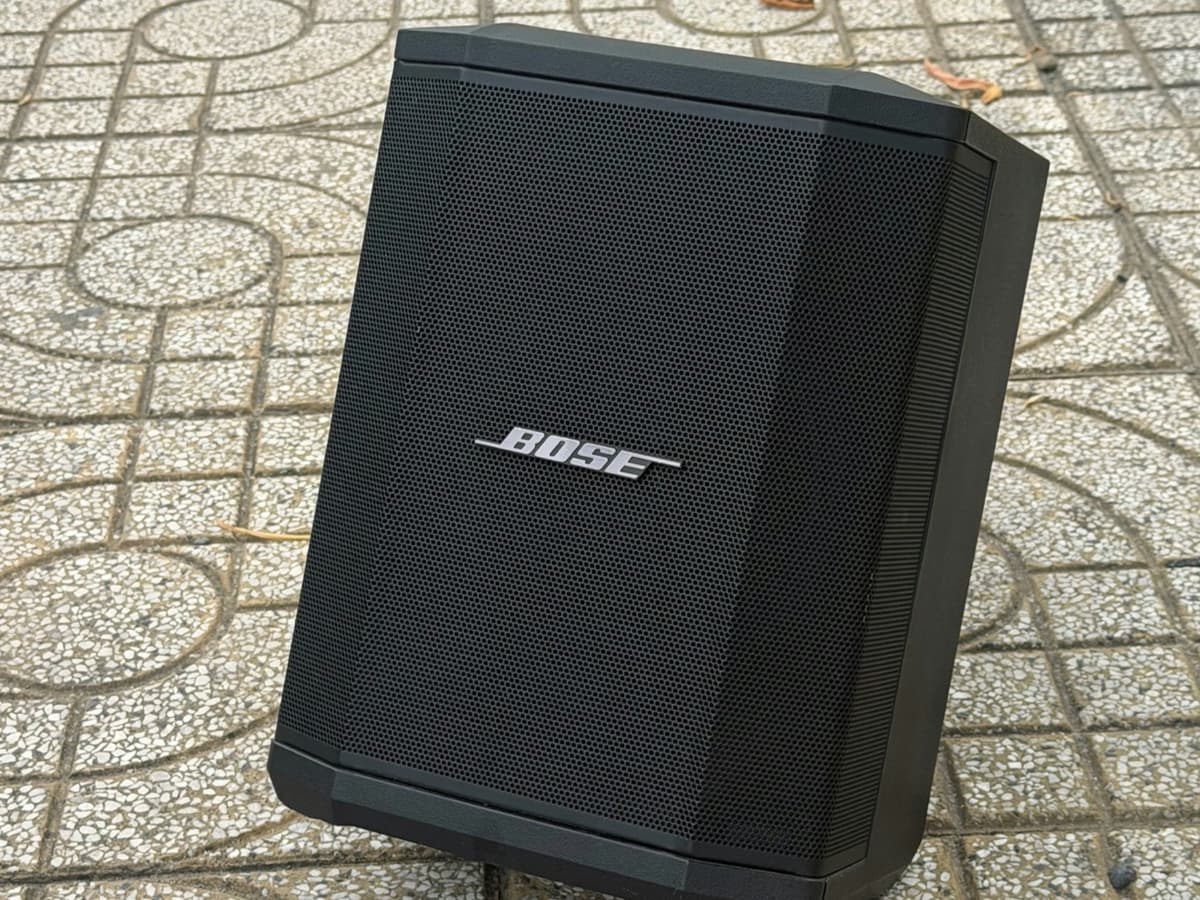
There’s no single “best party speaker” — only the best one for you.
Someone who wants a loud speaker for a backyard barbecue needs a different one than someone running music and a microphone for a 100-person outdoor event.
Our AI doesn’t have a quota to fill — it has one job: finding what fits your exact needs, not the one with the best commission.
A personalized match
Not a generic top-ten list
Save hours of research
Skip the endless tabs
100% free to use
No hidden fees, no signup
Honest recommendations
Not sponsored picks
Tailored questions, not a fixed checklist
Your questions are generated for what you’re actually shopping for, and each answer shapes the next one. Here’s how it starts.
- 1
Crowd size and space
A garden gathering, a hall, or an open park where sound has nothing to reflect off.
- 2
Microphone or instrument inputs
Whether you'll make announcements, run karaoke, or plug in an instrument or a DJ controller.
- 3
Battery life at party volume
How long the event runs, and whether you can swap batteries or run on mains power.
… and more, depending on what you tell us.
Loudness in a big open space needs real size, and the marketing watt figures are close to meaningless. A "500W" rating tells you almost nothing about how loud or clean a speaker is outdoors, where there are no walls to reflect sound back. What matters is the physical size of the drivers and cabinet, and how the speaker behaves near its limit: good party speakers stay clean at 80 to 90% volume, cheap ones turn to distorted mush well before that. Read reviews that push the volume, not spec sheets.
Battery life at party volume is a fraction of the quoted number. A speaker rated for "18 hours" might do 3 to 5 at the volume a party actually needs, and less with a light show running. For an all-day event, look for a genuine high-volume rating, a removable or hot-swappable battery, or the ability to run on mains power. Always have a plan for when the battery dies mid-event.
Decide whether you need inputs beyond Bluetooth. If you will ever make announcements, run karaoke, or plug in an instrument or a DJ controller, you need a speaker with real microphone and line inputs and ideally basic mixing (the Bose S1 Pro and JBL PartyBox series do this). If it is purely a music box you stream to, you can skip that and get more speaker for the money.
Two speakers cover a space far better than one loud one. A single speaker gets directional and uneven as you turn it up; a stereo or dual-mono pair, one at each end of the area, gives even coverage at lower distortion. Most party speakers can pair two identical units, and some chain many. If the budget allows, two mid-sized speakers beat one large one for an actual party.
Match the build to where it lives. For a covered patio, splash resistance (IPX4) is enough. For a beach, a field or a boat, you want IP65 or better and a design that tolerates sand and dust. Weight matters more than people expect once you are carrying it across a park: over about 15kg you want wheels and a telescoping handle, which the bigger PartyBox and Soundboks-style units have.
How QuickPick works
Tell us what you need
In plain English. No model numbers, no spec knowledge required.
Answer a few smart questions
Our AI asks what actually changes the answer, then stops asking.
Get your top matches
A short, ranked shortlist you can compare side by side, with prices.
What actually changes as you spend more
Not a list of picks. Just a sense of which band you belong in before you answer a single question.
$120 – $250
JBL PartyBox Encore, Sony ULT Field, Soundcore Rave. Loud enough for a garden or a small room, IPX4 to IP67, a microphone input on some, and a light show. Battery drops fast at high volume.
$350 – $600
JBL PartyBox 320 or 520, Bose S1 Pro+, Sony ULT Tower. Genuinely fills a backyard or a hall, real microphone and instrument inputs with mixing, swappable or long batteries, and stereo pairing. The practical choice for regular hosting.
$800 – $1,500
Soundboks, JBL PartyBox Ultimate, or a pair of the mid-range units. Concert-adjacent volume that stays clean at the top of the dial, hot-swap batteries, and a build made to be thrown in a truck. Overkill for a barbecue; right for events and semi-pro use.
Typical street prices, reviewed 2026-09-03. QuickPick shows live retailer prices on your actual matches.
Frequently asked questions
- How loud a speaker do I need for an outdoor party?
- For a garden with 10 to 20 people, a large portable (JBL Xtreme, PartyBox Encore) is enough. For 30 to 60 people in a yard or hall, a PartyBox 320/520 or Bose S1 Pro. For 100-plus in the open, you want two mid-to-large units or a Soundboks-class speaker, because open air gives no acoustic help.
- Do speaker wattage numbers mean anything?
- Very little for comparison. Brands measure watts inconsistently, and outdoors the number tells you nothing about perceived loudness or how clean the speaker stays near its limit. Driver size, cabinet size and reviews that test at high volume are far more informative.
- How long will a party speaker's battery last at volume?
- Roughly a quarter to a third of the quoted figure at the volume a party needs, and less with lights on. An "18 hour" speaker may give 4 to 6 hours of real party use. For long events, choose a model with a swappable battery or a mains input, and bring a backup plan.
- Can I plug a microphone into a party speaker?
- Only some. The Bose S1 Pro and JBL PartyBox lines have proper mic and instrument inputs with basic level control, which suits speeches, karaoke and small live sets. Many pure music speakers have no mic input at all, so if you need one, filter for it before comparing sound.
- Should I get one big speaker or two smaller ones?
- Two smaller ones, placed at opposite ends of the space, give more even coverage and each distorts less because neither is maxed out. A single large speaker is simpler to carry and set up. Most party speakers support pairing two identical units for exactly this.
- What water resistance do I need for an outdoor speaker?
- IPX4 covers a covered patio and light rain. For a beach, a field or a boat, look for IP65 or higher so sand and spray are not a problem. Check that any input panel or battery door seals properly, since that is usually the weak point.
Honest recommendations — not endless tabs.
Answer a few questions and get matched in under a minute. Free, and no signup.
Looking for something else?