

Best Bookshelf Speakers
Tell us your room, your sources and whether you have an amp. We match the speakers to that, not to a spec sheet.
Find my matchFree to use, and there’s no account to create. We ask for an email at the end so we can send your matches to you.
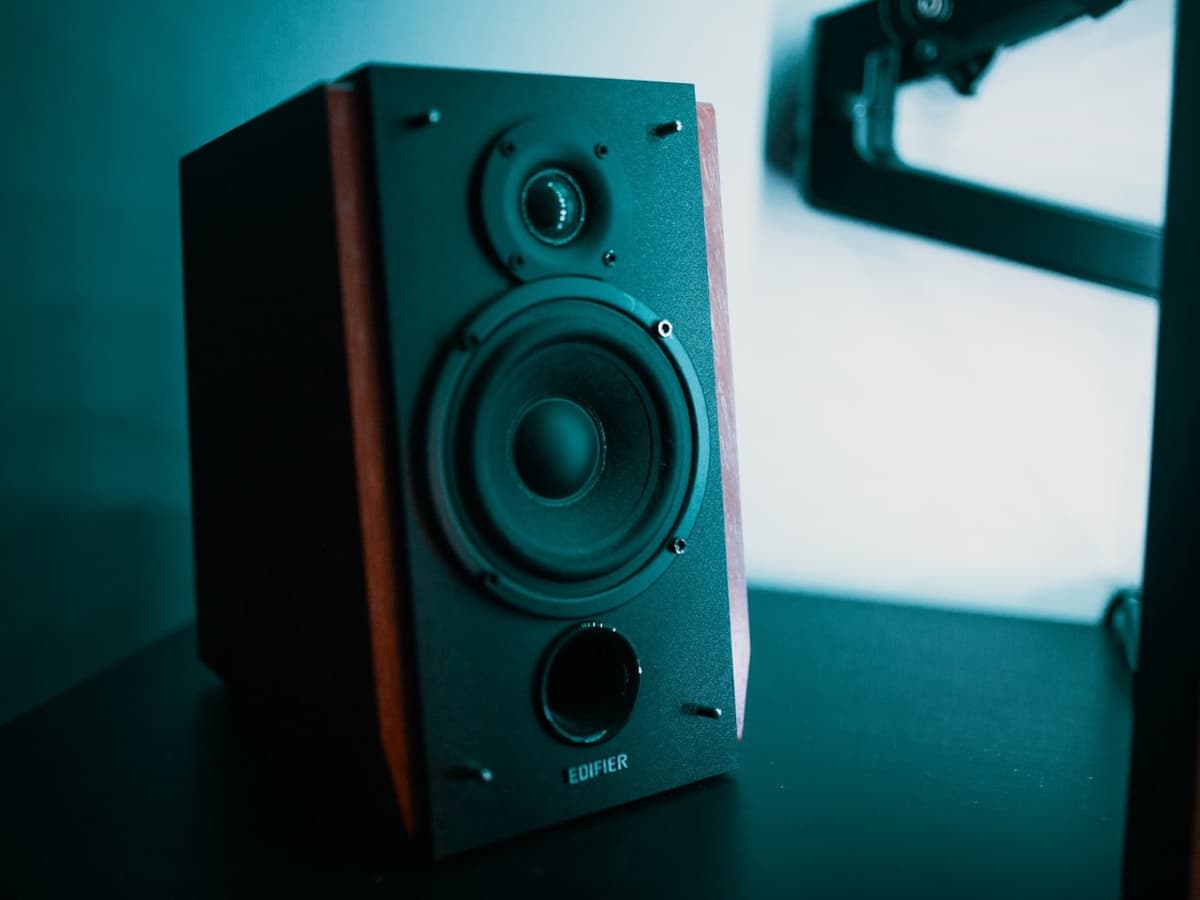
There’s no single “best bookshelf speakers” — only the best one for you.
Someone setting up their first proper stereo in a small flat needs a different pair than someone with a dedicated listening room, an amplifier and a turntable already in place.
Our AI doesn’t have a quota to fill — it has one job: finding what fits your exact needs, not the one with the best commission.
A personalized match
Not a generic top-ten list
Save hours of research
Skip the endless tabs
100% free to use
No hidden fees, no signup
Honest recommendations
Not sponsored picks
Tailored questions, not a fixed checklist
Your questions are generated for what you’re actually shopping for, and each answer shapes the next one. Here’s how it starts.
- 1
Powered or passive
Amplifier built in and ready to plug sources into, or passive speakers that need a separate amp you own or will buy.
- 2
Room size and listening distance
A bedroom or desk versus a living room, and how far you sit from the speakers.
- 3
What you'll play them from
A turntable, a TV, a computer or a streamer, and which physical inputs that means you need.
… and more, depending on what you tell us.
The first decision is powered versus passive, and for most people now the answer is powered. Powered (active) bookshelf speakers have the amplifier built into one cabinet, take inputs directly from a turntable, TV or laptop, and often add Bluetooth and a phono stage: a complete system in two boxes. Passive speakers need a separate amplifier or receiver, which means more money, more space and more matching, in exchange for more upgrade flexibility later. Unless you already own an amp or specifically want that path, buy powered.
Match the speaker to the room, not the other way round. A small pair with 4 to 5 inch woofers is right for a bedroom, a desk or a flat, and will sound tight and clear there where a big pair would overload the room with bass. A larger pair with 6.5 inch woofers wants a proper living room and space to breathe. Bigger is not better in a small room; it is just boomier.
Placement decides half the sound quality and costs nothing. Bookshelf speakers want to be on stands or solid shelves, roughly at ear height when you are seated, angled slightly toward the listening position, forming a rough equilateral triangle with your seat. Rear-ported speakers jammed against a wall sound bloated and muddy; either pull them 20 to 30cm out, or choose a front-ported or sealed design if they must go on a shelf.
Sort out the inputs before you fall for the sound. With a turntable, you need a speaker or amp with a built-in phono stage, or a separate phono preamp: a plain line input will be far too quiet and thin. For a TV, an optical or HDMI ARC input is cleaner than Bluetooth. For a computer, USB or a 3.5mm line-in. List your sources first and confirm the speakers or amp physically accept all of them.
A subwoofer is optional and situational. Good bookshelf speakers reach low enough for most music in a normal room, and a sub mainly helps with movies, electronic music or a large space. If you add one, most powered speakers and amps have a dedicated sub output; if they do not, that is a reason to choose a different pair. Start without, and add one only if you find yourself missing the bottom end.
How QuickPick works
Tell us what you need
In plain English. No model numbers, no spec knowledge required.
Answer a few smart questions
Our AI asks what actually changes the answer, then stops asking.
Get your top matches
A short, ranked shortlist you can compare side by side, with prices.
What actually changes as you spend more
Not a list of picks. Just a sense of which band you belong in before you answer a single question.
$120 – $250
Edifier R1280 or R1700, Micca, Q Acoustics 3010 (passive). Powered pairs with Bluetooth and simple inputs that are a huge step up from a soundbar or a smart speaker for music. Modest bass and a plainer finish.
$350 – $700
KEF Q or LSX II, ELAC Debut, Q Acoustics 3030i, Kanto ORA. Noticeably cleaner and wider sound, better cabinets, and streaming built in on the powered models. Where a bookshelf pair starts to sound genuinely hi-fi.
$900 – $2,000
KEF LS50 (passive or Wireless), Buchardt, Dynaudio, ELAC Uni-Fi Reference. Serious drivers and cabinets, room correction on the wireless models, and sound that rewards good sources and careful placement. Diminishing returns unless the room and the rest of the setup keep up.
Typical street prices, reviewed 2026-09-03. QuickPick shows live retailer prices on your actual matches.
Frequently asked questions
- Powered or passive bookshelf speakers?
- Powered for most people: the amplifier is built in, sources plug straight in, and it is often a two-box complete system with Bluetooth and a phono input. Passive if you already own an amplifier or receiver, or you want to upgrade amp and speakers separately over time. Passive adds cost, space and matching decisions.
- What size bookshelf speakers do I need for my room?
- For a bedroom, a desk or a small flat, a pair with 4 to 5 inch woofers sounds tight and clear and will not overwhelm the space. For a living room, 5.25 to 6.5 inch woofers with room to breathe. A large pair in a small room mostly adds boom, not quality.
- Do I need speaker stands?
- Ideally yes. Bookshelf speakers sound best on rigid stands (or a very solid shelf) with the tweeters near ear height when you are seated. Stands decouple the speaker from resonant furniture and let you get placement and toe-in right, which matters more to the sound than a modest step up in speaker price.
- Can I connect a turntable to bookshelf speakers?
- Only through a phono stage. Some powered bookshelf speakers (certain Edifier, Kanto and Andover models) have one built in, and you plug the turntable straight in. Otherwise you need a separate phono preamp between the turntable and the speakers or amp. A turntable connected to a plain line input will sound far too quiet and thin.
- Do bookshelf speakers need a subwoofer?
- Not for most music in a normal-sized room; good bookshelf speakers reach low enough. A subwoofer helps with movies, bass-heavy electronic music, or a large room. If you might add one, choose speakers or an amp with a subwoofer output. Start without and only add one if you notice the low end missing.
- How much should I spend on bookshelf speakers?
- $120–$250 buys a powered pair that transforms music versus a soundbar or smart speaker. $350–$700 is where they sound genuinely hi-fi, with better cabinets and streaming. Above $900 the gains are real but need good sources and placement to hear, so spend there only once the rest of the setup is sorted.
Honest recommendations — not endless tabs.
Answer a few questions and get matched in under a minute. Free, and no signup.
Looking for something else?